
Entre el 3 de abril de 1888 y el 13 de febrero de 1891 se cometieron, en el distrito de Whitechapel, en Londres, una serie de terribles asesinatos que conmocionaron y aterrorizaron a la convulsa sociedad de la epoca. Once fueron los terribles asesinatos que acabaron recibiendo el nombre de los asesinatos en Whitechapel. El asesino en serie nunca fue identificado, pero ha sido mundialmente conocido con el nombre de Jack el Destripador.

En la investigacion se describe a este asesino como inteligente, eficaz, burlon, astuto, frio y obsesionado por el asesinato. De los once ataques que en un principio se le atribuyeron, que involucraban a prostitutas de los barrios pobres del East End, solo cinco de ellos son finalmente asociados directamente al Destripador. Se cree que los demas crimenes fueron cometidos por otras personas, intentando copiar el modus operandi distintivo -estrangulación, degollamiento y mutilacion abdominal.

Para aquellos que quieran profundizar en este tema y este personaje, sus teorias y misterios, en esta entrada os recomendamos varios libros:

En la investigacion se describe a este asesino como inteligente, eficaz, burlon, astuto, frio y obsesionado por el asesinato. De los once ataques que en un principio se le atribuyeron, que involucraban a prostitutas de los barrios pobres del East End, solo cinco de ellos son finalmente asociados directamente al Destripador. Se cree que los demas crimenes fueron cometidos por otras personas, intentando copiar el modus operandi distintivo -estrangulación, degollamiento y mutilacion abdominal.
Para aquellos que quieran profundizar en este tema y este personaje, sus teorias y misterios, en esta entrada os recomendamos varios libros:
 | Jack the Ripper An Encyclopedia The gruesome unsolved murders by the first media-sensationalized serial killer, Jack the Ripper, continue to fascinate us after more than a hundred years. However, from the beginning the truth has been obscured by a fog of half-truths and misinterpretations. Jack the Ripper: An Encyclopedia clears up a century of misinformation and myth. The author uses a critical case review of the kind that is now used to scrutinize unsolved crimes. He rechecks, reexamines, and reevaluates the facts, conjectures, newspaper accounts, eyewitness reports, and official pronouncements. The book includes: descriptions of the locations where the bodies were found; detailed histories of the victims; profiles of key police officials and examinations of police procedures, investigations, blunders, and errors; details of prevailing myths about the case; a meticulous evaluation of all the chief suspects; comprehensive analysis of the existing literature; discussion of written communications ostensibly sent by the Ripper; and a closely reasoned and well-supported argument identifying the most likely suspect. Maps, illustrations, a chronology, an introduction, a bibliography, and an index complete this comprehensive reference to a notorious chapter in British criminal history. |
 | Jack The Ripper The Definitive History In 1888 the Whitechapel area of London was the scene of some of the most brutal murders ever recorded in history - and yet the case of Jack the Ripper remains unsolved. Steering clear of wild conspiracy theories, and spurious attempts to advance new theories about the identity of the culprit, Paul Begg instead provides the facts behind one of the most infamous and grisly episodes of the Victorian era. The book is a social history of Victorian East London as it is about the murders themselves. Begg argues that the case excited such interest precisely because of the notoriety of the East End at the time. Chronological coverage includes detailed accounts of the lives of each of the victims and an examination of the police investigation. |
 | Jack The Ripper The Secret Police Files For over a decade retired British police murder squad detective Trevor Marriott has been re investigating the Whitechapel murders of 1888 which were attributed to the fearsome killer known as Jack the Ripper. He discovered secret Metropolitan Police Special Branch records going back to 1888 which had never before been made public which contained new evidence on the case, along with the names of four new police ripper suspects never before mentioned throughout the 125 years of Ripper investigations. His investigation uncovered new evidence which now suggests many of the original accepted theories surrounding this mystery have been wrong for over 125 years. Marriott now firmly believes that the killer did not remove the organs from the victims at the crime scenes as has been previously thought. He assembled a specialist medical team in an attempt disprove this theory. Further new evidence gathered also now eliminates some of the prime suspects who have been continuously investigated for the past 125 years As a result of new evidence gathered Trevor Marriott now concludes that all of the victims may not have been killed by the same person and that the legend of Jack the Ripper is nothing more than an urban myth created by a member of the press in 1888. |
 | Jack the Ripper No-one in the annals of crime is capable of arousing such passionate debate as the perpetrator of the Whitechapel Murders in 1888. Was he a demented royal, a Masonic assassin, a misogynist don, a member of the Czarist secret police, a crazed reformist or even an escaped gorilla? Over a hundred years have passed since this unknown killer murdered East End prostitutes under the very noses of the police and yet we seem no closer to uncovering the Ripper's identity. Countless volumes have been written by warring researchers, seemingly unable to agree even on the number of his victims. Is it possible that we will ever know the truth or is the Ripper destined to remain an enigma, his place in history secured as both an English-heritage crime icon and a universal bogeyman? What's in this book? As well as an introductory essay, there are considerations of many of the Ripper's proposed identities, a summary of his crimes, victims and the ill-fated investigation, plus a guide to the Ripper's many fictional outings, from Hitchcock's The Lodger to Alan Moore and Eddie Campbell's From Hell. |
 | Jack the Ripper and Black Magic Victorian Conspiracy Theories, Secret Societies and the Supernatural Mystique of the Whitechapel Murders Jack the Ripper is a legendary gothic tale of Victorian conspiracies, the supernatural, secret societies and the police. Scotland Yard hunted a serial killer shrouded in politics as the mutilator of East End prostitutes infused pop culture with demonic horror. This book uses historic sources and rare official reports to reveal dark and supernatural aspects of the Ripper case. |
 | Jack the Ripper and the Case for Scotland Yard's Prime Suspect An investigation into the man Scotland Yard thought (but couldn't prove) was Jack the RipperDozens of theories have attempted to resolve the mystery of the identity of Jack the Ripper, the world's most famous serial killer. Ripperologist Robert House contends that we may have known the answer all along. The head of Scotland Yard's Criminal Investigation Department at the time of the murders thought Aaron Kozminski was guilty, but he lacked the legal proof to convict him. By exploring Kozminski's life, House builds a strong circumstantial case against him, showing not only that he had means, motive, and opportunity, but also that he fit the general profile of a serial killer as defined by the FBI today.
|
 | Jack the Ripper and the London Press Press coverage of the 1888 mutilation murders attributed to Jack the Ripper was of necessity filled with gaps and silences, for the killer remained unknown and Victorian journalists had little experience reporting serial murders and sex crimes. This engrossing book examines how fifteen London newspapers - dailies and weeklies, highbrow and lowbrow - presented the Ripper news, in the process revealing much about the social, political, and sexual anxieties of late Victorian Britain and the role of journalists in reinforcing social norms. L. Perry Curtis surveys the mass newspaper culture of the era, delving into the nature of sensationalism and the conventions of domestic murder news. Analyzing the fifteen newspapers - several of which emanated from the East End, where the murders took place - he shows how journalists played on the fears of readers about law and order by dwelling on lethal violence rather than sex, offering gruesome details about knife injuries but often withholding some of the more intimate details of the pelvic mutilations. He also considers how the Ripper news affected public perceptions of social conditions in Whitechapel. |
 | Otoño de Terror El horror atenazó la tierra. Los hombres hablaban del mismo apenas sin poder respirar, por el miedo que sentían, y las mujeres de labios pálidos se estremecían constantemente cuando leían las noticias de los diarios. Así es como un autor de la época describió el otoño de 1888, cuando un misterioso asesino conocido como Jack el Destripador asesinó y descuartizó a cinco prostitutas del East End de Londres en el plazo de diez semanas. Los crímenes de Whitechapel consternaron a todo Londres. Se forjaron muchas teorías, entre las cuales una parecía la más probable: el asesino era un extranjero. Ningún inglés podía ser capaz de cometer tamañas atrocidades. Pero al final quedó una pregunta sin respuesta ¿Quién fue Jack el Destripador? En esta obra se examinan las diversas teorías que circularon y aún circulan respecto al Destripador pero, por fin, se revelan los nombres de los tres sospechosos que en su época tuvo Scotland Yard, en particular la identidad del principal de ellos. |
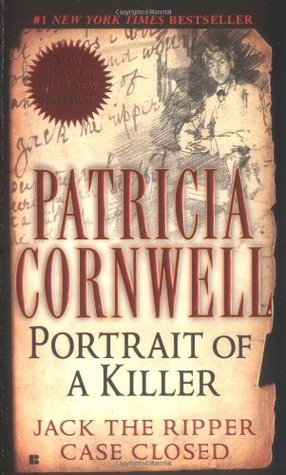 | Portrait of a Killer Jack The Ripper Case Closed In the fall of 1888, all of London was held in the grip of unspeakable terror. An elusive madman calling himself Jack the Ripper was brutally butchering women in the slums of London’s East End. Police seemed powerless to stop the killer, who delighted in taunting them and whose crimes were clearly escalating in violence from victim to victim. And then the Ripper’s violent spree seemingly ended as abruptly as it had begun. He had struck out of nowhere and then vanished from the scene. Decades passed, then fifty years, then a hundred, and the Ripper’s bloody sexual crimes became anemic and impotent fodder for puzzles, mystery weekends, crime conventions, and so-called “Ripper Walks” that end with pints of ale in the pubs of Whitechapel. But to number-one New York Times bestselling novelist Patricia Cornwell, the Ripper murders are not cute little mysteries to be transformed into parlor games or movies but rather a series of terrible crimes that no one should get away with, even after death. Now Cornwell applies her trademark skills for meticulous research and scientific expertise to dig deeper into the Ripper case than any detective before her—and reveal the true identity of this fabled Victorian killer. In Portrait of a Killer: Jack the Ripper, Case Closed, Cornwell combines the rigorous discipline of twenty-first century police investigation with forensic techniques undreamed of during the late Victorian era to solve one of the most infamous and difficult serial murder cases in history. Drawing on unparalleled access to original Ripper evidence, documents, and records, as well as archival, academic, and law-enforcement resources, FBI profilers, and top forensic scientists, Cornwell reveals that Jack the Ripper was none other than a respected painter of his day, an artist now collected by some of the world’s finest museums: Walter Richard Sickert. It has been said of Cornwell that no one depicts the human capability for evil better than she. Adding layer after layer of circumstantial evidence to the physical evidence discovered by modern forensic science and expert minds, Cornwell shows that Sickert, who died peacefully in his bed in 1942, at the age of 81, was not only one of Great Britain’s greatest painters but also a serial killer, a damaged diabolical man driven by megalomania and hate. She exposes Sickert as the author of the infamous Ripper letters that were written to the Metropolitan Police and the press. Her detailed analysis of his paintings shows that his art continually depicted his horrific mutilation of his victims, and her examination of this man’s birth defects, the consequent genital surgical interventions, and their effects on his upbringing present a casebook example of how a psychopathic killer is created. |
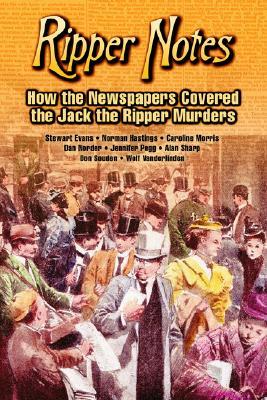 | Ripper Notes How the Newspapers Covered the Jack the Ripper Murders "Ripper Notes: How the Newspapers Covered the Jack the Ripper Murders" is a collection of essays about press reports of the notorious Whitechapel serial killer as well as other related topics. "When the People Were in Terror" by Norman Hastings republishes for the first time a comprehensive series of early 20th century articles about the impact the Whitechapel murders had on society, from the police investigation of the crimes to the fear that gripped the public. "The Murder in Cartin's Court" by Don Souden looks at how the early newspaper reports seriously bungled the facts of the death of Mary Jane Kelly, the fifth (and last) of the canonical five Ripper victims. "The London Police: The View from the Irish Press" by Alan Sharp examines how journalists reacted to the police investigation, concentrating on reports printed in Ireland. Other contents include Stewart P. Evans with new information on the legends that psychic Robert Lees solved the case, Wolf Vanderlinden looking for the meaning behind several contemporary newspaper reports, and several other short pieces. Ripper Notes is a nonfiction anthology series covering all aspects of the Jack the Ripper case. |
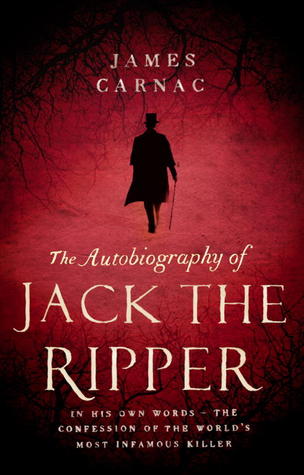 | The Autobiography of Jack the Ripper This memoir was recently discovered and appears to have been written in the 1920s by somone who asserts that he was Jack the Ripper. This person is James Carnac, this memoir written shortly before his death is an account of his entire life, including a few short months in 1888 when he became the murderer known to posterity as Jack the Ripper. This book introduces a new suspect for the infamous murders in Whitechapel in 1888. There is information in this book that does not appear to be derived from contemporary newspapers or any other publications and the descriptions of Tottenham in the 1870s, the visits to performances of Jekyll and Hyde, the intricate geography of Whitechapel in 1888 are written with pin-point accuracy. There is also a credible motive given for James becoming the murderer Jack and also a reason for the end of the murders. Given the fact that the author also appear to have knowledge about aspects of the case not in the public arena at the time it could be that this actually is the autobiography of Jack the Ripper. Ultimately it is up to the reader to decide if they believe the mystery has been solved at last but even if they end up deciding the account to be a work of fiction it would still be one of the very earliest imaginings of the Ripper case, written in the early years of the twentieth century, a fascinating piece of period writing and a worthy addition to the Ripper canon. Whatever side they come down on there is no question that this book will be a source of much debate. |
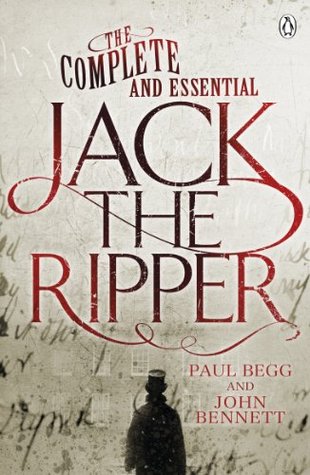 | The Complete and Essential Jack The Ripper Discover the truth behind the myth in The Complete Jack the Ripper by Paul Begg and John Bennett. Whitechapel, 1988: a spate of brutal murders becomes the most notorious criminal episode in London's history. The killer, chillingly nicknamed 'The Whitechapel Murderer', 'Leather Apron' and, most famously, 'Jack the Ripper', is never brought to justice for the slaughter and mutilation of at least five women in the slums of East London. But the mystery is deepened by a letter sent "From Hell" to Scotland Yard, accompanied by half of a preserved human kidney... In this comprehensive account of London's most infamous killer, the foremost authorities on the case explore the facts behind the most grisly episode of the Victorian era. Setting the scene in the impoverished East End, the authors' meticulous research offers detailed accounts of the lives of the victims and an examination of the police investigation. The Complete Jack the Ripper is the definitive book by Paul Begg and John Bennett, exploring both the myth and reality behind the allusive killer. Paul Begg and John Bennett are researchers and authors, widely recognized as authorities on Jack the Ripper. Paul Begg's books include Jack the Ripper: The Facts, Jack the Ripper: The Definitive History, and he is a co-author of The Jack the Ripper A to Z. John Bennett has written numerous articles and lectured frequently on Jack the Ripper and the East End of London. He has acted as adviser to and participated in documentaries made by television channels worldwide and was the co-writer for the successful Channel 5 programme Jack the Ripper: The Definitive Story. He is author of E1: A Journey Through Whitechapel and Spitalfields and co-author of Jack the Ripper: CSI Whitechapel. |
 | The Complete History of Jack The Ripper A comprehensive account of London's celebrated East End killer, revised and updated. The murders in London between 1888-91 attributed to Jack the Ripper constitute one of the most mysterious unsolved criminal cases. This story is the result of many years meticulous research. The author reassesses all the evidence and challenges everything we thought we knew about the Victorian serial killer and the vanished East End he terrorized. |
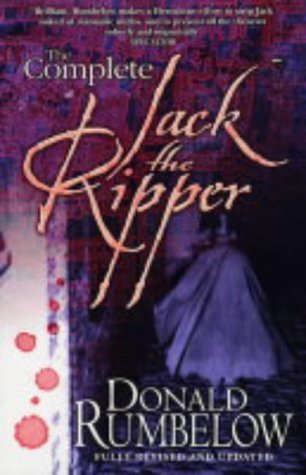 | The Complete Jack the Ripper Discover the theories and facts surrounding the Whitechapel murders in David Rumbelow's "The Complete Jack the Ripper"...It is 1888 in London's Whitechapel district, where one by one a group of prostitutes are brutally murdered. Opium smoking Inspector Fred Abberline is called upon to investigate these horrific murders and through his visions track down and trap Jack the Ripper. David Rumbelow's casebook sets the crimes firmly in their historical setting, examines the evidence comprehensively and scrupulously, disposes of a number of theories and legends and relates the murder to popular literature and to later similar sex crimes. In addition he has had the advantage of access to some of Scotland Yard's most confidential papers. |
 | The Crimes of Jack the Ripper The Whitechapel Murders Re-Examined More than a century after he stalked the streets of London's East End, Jack the Ripper continues to exert a macabre power over the popular imagination. Author Paul Roland strips away decades of myth and misconceptions to reveal the identity of a brand new suspect who has never been seriously considered until now. |
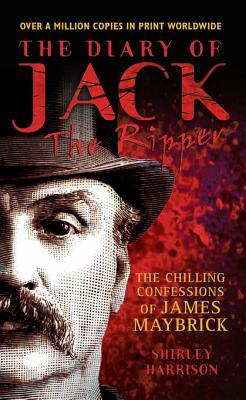 | The Diary of Jack the Ripper The Chilling Confessions of James Maybrick The pages of "The Diary of Jack the Ripper" reveal the unimaginable--that more than a century ago, the legendary serial killer at work in London's Whitechapel kept a record of his bestial mutilations of women. The writer of the horrific journal is James Maybrick, a depraved, drug-taking, womanizing, 49-year-old Liverpool cotton merchant with a history of domestic violence. In this analysis of his diary, investigative author Shirley Harrison explains all about the origins of the text and the rigorous scientific analysis it has endured while revealing startling new information about Maybrick's shadowy background. This evidence, along with a chilling confession scratched into a watch--"I am Jack. J Maybrick," provide powerful justification that Maybrick was Jack the Ripper. The diary itself is reproduced in full, so that readers can judge whether these are the deeply distributing words of Jack the Ripper himself, reaching out from across the abyss of more than a century. |
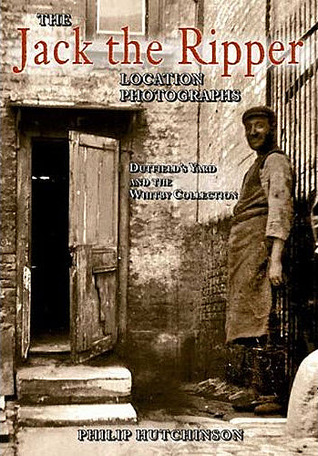 | The Jack The Ripper Location Photographs Dutfield's Yard and the Whitby Collection A must have book for Jack the Ripper historians - the first collection of its kind, including a previously unpublished image of Elizabeth Stride. |
Se podian localizar la mayoria de los libros en este link por torrent.
Los sospechosos habituales lo podeis encontrar en el Depot.
Los sospechosos habituales lo podeis encontrar en el Depot.




No hay comentarios:
Publicar un comentario